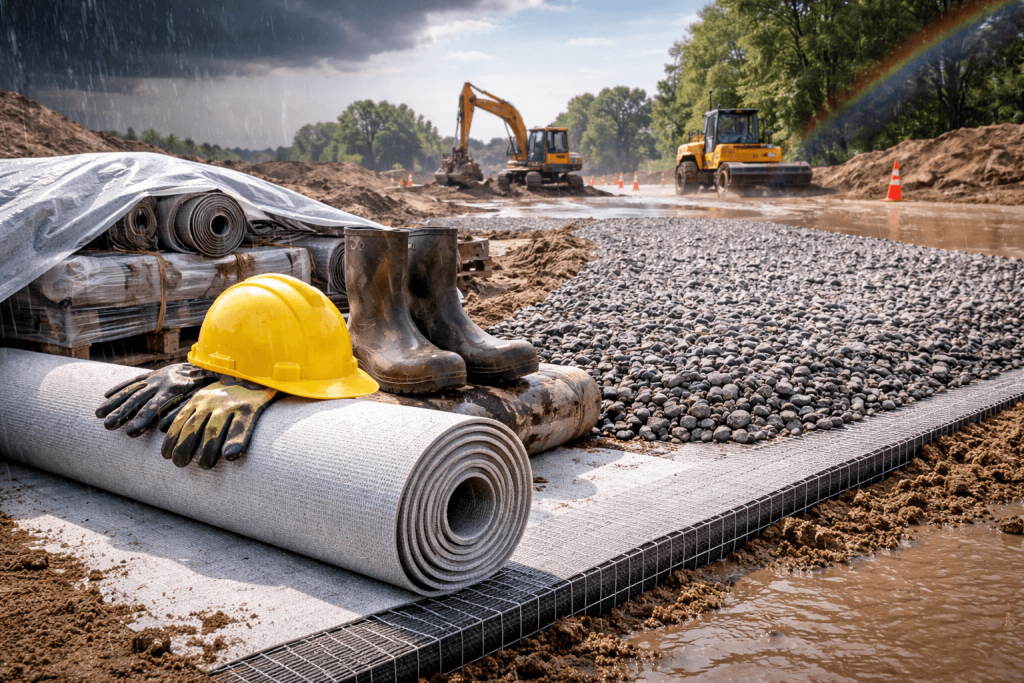
How much does the weather impact the performance of construction materials during installation?
In geotechnical engineering, environmental conditions play a critical role—especially when working with materials like geotextiles that interact directly with soil and external elements.
Geotextiles are widely used in construction projects for functions such as separation, filtration, reinforcement, and drainage. However, their effectiveness depends not only on design and material selection but also on how they are handled and installed on site. Weather conditions—ranging from heavy rainfall to high temperatures—can influence installation quality and long-term performance.
Understanding how weather affects geotextile installation helps engineers and contractors minimise risks, maintain quality standards, and ensure reliable project outcomes.
Why Installation of Geotextiles Matters
Geotextiles are permeable synthetic fabrics used in civil engineering to improve soil performance. They are commonly applied in:
- Road and pavement construction
- Erosion control systems
- Drainage applications
- Land reclamation and slope stabilisation
While geotextiles are designed for durability, their performance is highly dependent on correct installation practices. Improper installation—especially under adverse weather conditions—can lead to:
- Reduced strength and effectiveness
- Material damage
- Increased risk of failure
Key Weather Conditions That Affect Geotextile Installation
1. Rainfall and Moisture
Impact on Installation
Rain is one of the most significant environmental factors affecting construction projects. Excessive moisture can:
- Soften the subgrade, reducing stability
- Cause difficulty in laying geotextiles smoothly
- Increase the risk of contamination with mud or debris
Effect on Performance
- Reduced friction between layers
- Potential displacement of geotextile during installation
- Increased likelihood of wrinkles or folds
Best Practices
- Avoid installation during heavy rainfall
- Ensure proper site drainage before installation
- Protect exposed geotextiles from water accumulation
2. Temperature Extremes
High Temperatures
Hot weather can:
- Make geotextiles more flexible and easier to handle
- Increase the risk of thermal expansion
- Accelerate material ageing if exposed for long periods
Low Temperatures
Cold conditions can:
- Make materials stiffer and harder to handle
- Increase the risk of cracking or damage during placement
Best Practices
- Store materials in shaded or temperature-controlled areas
- Avoid prolonged exposure before installation
- Adjust installation techniques based on temperature conditions
3. Ultraviolet (UV) Exposure
Impact on Materials
Prolonged exposure to sunlight can degrade geotextile materials over time.
- Loss of tensile strength
- Reduction in durability
- Surface deterioration
Best Practices
- Minimise exposure time before covering
- Use UV-stabilised geotextiles where required
- Cover installed geotextiles promptly with soil or aggregate
4. Wind Conditions
Impact on Installation
Strong winds can:
- Lift or displace geotextile sheets
- Make alignment and placement difficult
- Increase the risk of damage during handling
Best Practices
- Secure geotextiles with temporary weights or anchoring
- Install during low-wind conditions when possible
- Use proper handling techniques to avoid tearing
5. Humidity
Impact on Construction Environment
High humidity can:
- Affect adhesive bonding in certain applications
- Promote condensation on surfaces
- Increase the likelihood of contamination
Best Practices
- Ensure dry and clean surfaces before installation
- Monitor environmental conditions during installation
- Store materials in moisture-protected environments
Effects of Weather on Geotextile Functions
Weather conditions can directly impact how geotextiles perform their core functions:
Separation
Excess moisture can weaken soil layers, reducing the effectiveness of separation.
Filtration
Clogging may occur if fine particles are mobilised due to water flow.
Drainage
Water accumulation can overload drainage capacity if not properly managed.
Reinforcement
Changes in soil strength due to moisture or temperature can affect reinforcement performance.
Common Installation Issues Caused by Weather
Wrinkling and Folding
Often caused by wet or uneven surfaces and wind interference.
1. Material Damage
UV exposure, handling in cold conditions, or wind can lead to tears or degradation.
2. Poor Contact with Subgrade
Moisture or debris can prevent proper bonding and contact.
3. Delayed Installation
Adverse weather conditions can disrupt project schedules and increase costs.
Strategies to Mitigate Weather-Related Risks
1. Project Planning and Scheduling
- Monitor weather forecasts closely
- Schedule installation during favourable conditions
- Build flexibility into project timelines
2. Proper Material Storage
- Store geotextiles in dry, covered areas
- Protect from direct sunlight and moisture
- Keep materials in original packaging until use
3. Site Preparation
- Ensure stable and well-drained subgrade
- Remove debris and sharp objects
- Prepare the site according to design specifications
4. Controlled Installation Practices
- Minimise exposure time before covering
- Use proper anchoring and securing methods
- Avoid installation under extreme weather conditions
5. Quality Control and Inspection
- Conduct regular site inspections
- Verify proper placement and alignment
- Identify and correct defects immediately
Importance of Experienced Installation Teams
Experienced contractors play a critical role in managing weather-related challenges. Skilled teams can:
- Adapt installation techniques based on conditions
- Identify risks early
- Maintain quality despite environmental variability
This is particularly important in large-scale infrastructure projects where delays or defects can have significant cost implications.
Long-Term Performance Considerations
Weather does not only affect installation—it also influences long-term performance:
- UV exposure can degrade materials over time
- Repeated wet-dry cycles can affect soil stability
- Temperature fluctuations can introduce stress
Selecting high-quality, durable geotextiles and ensuring proper installation helps mitigate these long-term risks.
Applications Where Weather Impact Is Critical
Weather considerations are especially important in:
- Road construction on soft soil
- Coastal and marine projects
- Slope stabilisation and erosion control
- Landfill and containment systems
In these environments, exposure to environmental conditions is unavoidable, making proper installation even more critical.
Conclusion
Weather conditions play a significant role in geotextile installation performance, influencing everything from material handling to long-term durability. Rain, temperature, UV exposure, wind, and humidity can all introduce challenges that affect installation quality and project outcomes.
By understanding these factors and implementing best practices, construction teams can minimise risks, maintain performance standards, and ensure successful geotextile applications.
Final Thoughts & Next Steps
For construction projects involving geotextile installation, accounting for weather conditions should be an integral part of planning and execution.
- Are your installation schedules aligned with weather conditions?
- Are your materials properly stored and protected?
- Are your teams equipped to handle environmental challenges?
Working with experienced geosynthetic specialists and adhering to best practices can help ensure reliable performance, even under challenging weather conditions.