
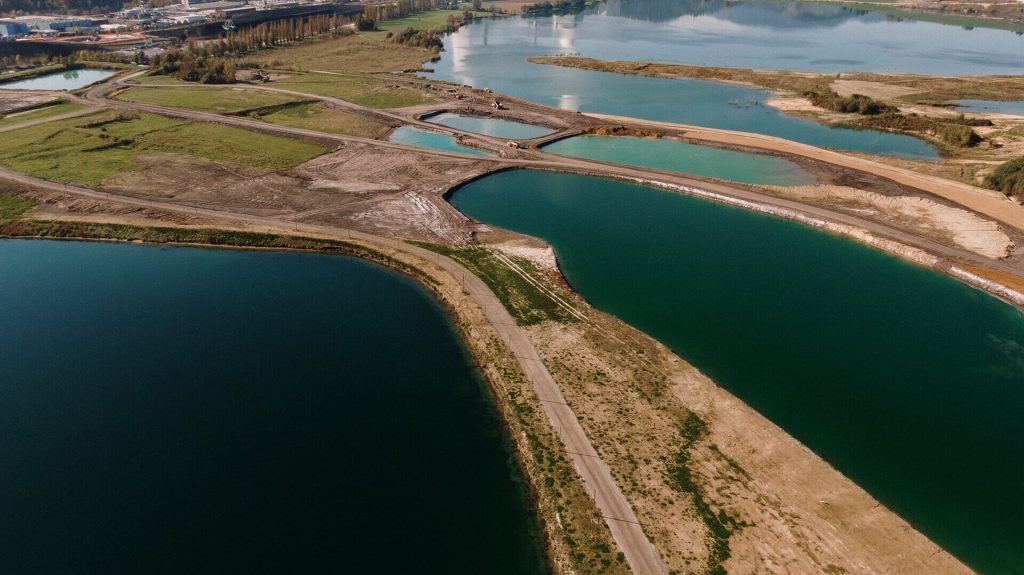
How can modern infrastructure cope with increasing flood risks while ensuring efficient water drainage and long-term environmental protection?
As climate change intensifies rainfall patterns and urban development accelerates, effective water management has become a critical priority for cities and civil engineering projects worldwide. This article explores how geosynthetics provide practical, sustainable solutions for water management, flood control, and erosion control.
From improving drainage performance to stabilising soil and protecting infrastructure, the following sections explain how geosynthetics are used, their key benefits, and why they play an essential role in resilient water management systems today.
Water management refers to the planning, development, distribution, and control of water resources to minimise risks while maximising efficiency and sustainability. In urban and rural environments alike, improper water management can lead to:
Traditional solutions such as concrete drains, open channels, and rigid retaining structures can be effective but often lack flexibility and adaptability. They may also involve high construction costs, longer installation times, and significant environmental disruption.
This is where geosynthetics offer a modern alternative—enhancing drainage performance while reinforcing soil and controlling erosion in a more sustainable way.
Geosynthetics are engineered polymeric materials used in contact with soil, rock, or water to improve the performance of civil engineering and environmental projects. Common types include:
Each type performs specific functions such as filtration, separation, drainage, reinforcement, and containment. In water management applications, these functions often work together to create integrated systems that manage water flow while maintaining structural stability.
One of the most important applications of geosynthetics is in water drainage systems. Nonwoven geotextiles and drainage composites are widely used to facilitate the controlled movement of water while preventing soil particles from clogging drainage pathways.
Typical applications include:
By allowing water to pass through while filtering out fine particles, geosynthetics help maintain long-term drainage efficiency and reduce maintenance requirements.
Traditional gravel drains can lose effectiveness over time due to soil migration and sediment buildup. Geotextiles act as a protective filter layer, significantly extending the lifespan of drainage systems and ensuring consistent hydraulic performance even under heavy rainfall conditions.
Flood control structures such as embankments, levees, detention ponds, and floodwalls rely heavily on soil stability and controlled water movement. Geosynthetics play a critical role in reinforcing these systems by:
Geomembranes, in particular, are used as impermeable barriers to prevent seepage and control water flow in flood protection systems.
As rainfall intensity becomes less predictable, infrastructure must be designed to handle higher water volumes and faster runoff. Geosynthetic-based systems offer flexibility in design and can be easily adapted or upgraded without extensive reconstruction—making them well suited to climate-resilient water management strategies.
Uncontrolled surface water runoff is a leading cause of erosion, particularly on slopes, embankments, riverbanks, and coastal areas. Erosion control using geosynthetics focuses on stabilising soil surfaces while allowing vegetation to establish naturally.
Common solutions include:
These systems reduce soil displacement, slow down water flow, and protect underlying materials during both normal and extreme weather events.
By promoting vegetation growth and reducing sediment loss, geosynthetic erosion control solutions help preserve ecosystems and improve water quality. They also minimise the need for hard engineering solutions, supporting more environmentally sensitive project designs.
Modern water management increasingly relies on integrated systems that combine drainage, reinforcement, and containment functions. Geosynthetics allow engineers to design multi-functional solutions that address several challenges simultaneously.
Examples include:
These integrated approaches not only improve performance but also reduce material usage, construction time, and long-term operational costs.
The growing adoption of geosynthetics in water management and flood control is driven by several key advantages:
Geosynthetics are designed to withstand chemical exposure, biological degradation, and long-term mechanical stress, ensuring reliable performance over decades.
Reduced excavation, thinner structural layers, and faster installation translate into significant cost savings across the project lifecycle.
Available in various forms and configurations, geosynthetics can be customised to suit site-specific conditions and complex geometries.
Lower material consumption, reduced carbon footprint, and improved environmental protection make geosynthetics a more sustainable alternative to conventional methods.
To maximise effectiveness, geosynthetics must be selected and installed correctly. Best practices include:
Engaging experienced geotechnical and civil engineering professionals is essential to ensure that geosynthetic systems deliver their intended performance over the long term.
As infrastructure demands grow and environmental pressures intensify, geosynthetics are expected to play an even greater role in water management, water drainage, and erosion control solutions. Ongoing innovation in materials science and design methodologies continues to enhance their performance, durability, and sustainability.
From flood-resilient cities to environmentally responsible infrastructure, geosynthetics offer a proven and adaptable toolkit for addressing today’s water challenges—while preparing for those of tomorrow.
Effective water management is no longer optional—it is a fundamental requirement for resilient and sustainable development. By integrating geosynthetics into drainage, flood control, and erosion protection systems, engineers and planners can create solutions that are not only technically sound but also environmentally responsible and future-ready.
Discover reliable geosynthetics solutions—partner with Gateway Structure SDN BHD to build resilient, future-ready infrastructure.
Copyright © Gateway Structure Sdn Bhd (199401025111). All Right Reserved.